project-image

Voidheart Symphony - What Are You Fighting For?

Created by Rowan, Rook and Decard

A role-playing game of psychic revolution in the shadows of the city.

Latest Updates from Our Project:

Playbook Deep Dive: The Void-Touched
12 months ago – Wed, Mar 19, 2025 at 08:16:44 AM

Hello, rebels! I'm here on Mina's behalf to post the next playbook deep dive. Read on...

All rebels hold the void within themselves – its impossibilities give them power, and its cosmic autonomy lets them stand in opposition to society. Alongside the power and the confidence, however, the void brings hunger and isolation and a gradual disintegration of the self. All rebels hold the void within them, but three cannot escape what it has done to them.


Each of these playbooks deviates from the standard model in ways big and small – in some places they use the same mechanics for different goals, while in other places they have unique subsystems crafted to bring the playbook’s themes to your table.


Let’s start with the simplest of these weird creatures: The Inhuman. It’s pretty fitting that they’re the one most like the ‘standard’ rebels, because that’s what they’re trying to be – but that’s not how they started out. 

There are so many possible origins for an inhuman. Maybe they were a mundane animal who took a bite out of something inadvisable. Maybe they were an errant concept floating in the void that stumbled on an errant chunk of reality. Maybe they were dead – or at least, the living’s memories of the dead – that somehow clawed their way back to life. Either way, the void and world worked alchemy upon them and now they’re walking the world as a real human, for a given definition of real. 

Those different origins are the source of The Inhuman’s crew covenants. A void-spirit uses the power of The Moon to infuse the fight with dreams and nightmares, and make their own form a tool to be shaped and twisted. A mindless place, object or animal granted sentience by accidental magic brings the power of The Star – throwing themselves into self-definition with great enthusiasm and helping others realise all the things they could become. And a once-mundane human brought back from the grave or otherwise transformed by the void uses the power of Death to bring radical change to others’ lives and conduct strange surgery on their souls.

Then there’s the mundane role the Inhuman tries to adopt. This is where the playbook deviates from the standard mold – instead of the normal categories of Delinquent, Prodigal and Traitor, the inhuman uses these three:
  • Pretender: Someone trying to blend in with regular humans and appear entirely mundane. Their effort to minimise their origins and keep their strangeness hidden comes with a mental toll, and they have a permanent black mark in Blood.
  • Interloper: Someone who exists on the fringes of society, using their strange perspective to live as an artist, fortune-teller, or general weirdo. Their lack of interest in keeping their strangeness hidden has benefits but also costs – in this case, a permanent black mark in Infamy.
  • Lurker: Something obviously inhuman: a talking fox, a gargoyle haunting rooftops, a patchwork zombie unwilling or unable to hide their nature. They’re still able to find a place in the city, but they can’t escape their alienation and the terror they cause in others – leading to a black mark in Fealty.
And of course, your Role can shift over the course of the campaign – your Interloper might be forced into the closet and become a Pretender, or your Pretender might grow tired of the pretense and embrace their nature as a Lurker.

In the castle, their struggle to build a new life takes a back seat to the uncanny powers their origin grants them. They can channel the hunger of the void to give their attacks horrible bite, consume a denizen of the castle to gain temporary access to their abilities, shape-shift as the situation demands, and even act as a guide out of the castle and through the void towards somewhere far stranger – someone’s dreams, the place where the dead go, even the castle’s true heart. They can even reach out to the avatar’s enforcers, forming a bond with them and offering them freedom from their master. 

Why rebel? Because humanity’s not the only creature that deserves freedom from the castle.


Sometimes, the things the system does to you aren’t the start of a cool origin story or inspirational, heart-tugging Lifetime movie – sometimes they just suck and don’t stop sucking and you somehow have to move on. That’s the case for The Captive. A while back something awful happened to them, something that left them comatose or dead or disappeared within the castle’s systems. They might not even know what happened to their body – but their mind still lingers, trapped in a prison floating in the void.

Captivity and restriction are the core themes of this playbook. Your castle form is all you have, and bears the scars of your struggle to survive. You don’t get to go back to the city after delving into a shard, but instead must return to your prison. And even when you get to visit the mundane world – carried along by another rebel – you’re chained to them and must work with all your might to move small objects or whisper into someone’s ear. Your crew covenant – The Shade – helps with this a little, letting you empower your host’s mundane actions and guide the other rebels through the castle, but at the end of the day you’re still going home to a cell.

Let’s talk about that prison. Firstly, your day-to-day concerns are so far from the norm that you use your own set of stress gauges. Instead of Blood, Lack, etc you must make do with these three:
  • Torment: The hostility you face from the other prisoners and guards. You resist it when you Let Your Hair Down with other prisoners or try to Pass Beneath Notice.
  • Fetters: The degradation of your soul and shape in the face of this deprivation. You resist it when you Make a Stand or find information with Rebel Eyes
  • Abyss: Your exposure to the hungry void, and subsequent loss of memories, personality traits and ideals. You resist this when you Vent the void’s power, Connect with a prisoner, or Check In with a rebel or prison resident.

As the captive’s player you get to define where you’re bound – within a powerful vassal’s shard, curled up in the hollow spaces between the castle’s shards, even floating free in the void. You get to say who’s chained up in there with you – maybe orphaned minions of a fallen vassal, a void-creature scavenging for scraps like vermin, or even emissaries of a neutral power indifferent to your war with the castle. As you start your game, your prison is pretty awful – uncomfortable climate, limited privacy, patrolling guards and hollow luxuries – but you can change that. Increasing your ranks with the World and Void won’t change your castle form, but instead will let you improve the prison – push back the guards, turn the cells into cosy and secure living spaces, make this place almost a home. But it takes a lot out of you to hold onto that power, and as soon as you let it go the punishments can come flooding back. There’s only one way to find true, lasting peace, and that’s to bring down the castle and set you all free.

So, what can you do to help the other rebels bring down the castle? A lot, as it turns out – staying in the void full-time has its perks, and each of your Shadow Moves gives you power in and out of the castle. Maybe you lean into the ghost theme, gaining the ability to pass intangibly through walls in the castle and float far away from your host in the city. Maybe you can help the other rebels Find Shelter by pulling them into a secret room their enemies can’t access, home to inhuman entities you can strike bargains with during downtime. Or maybe you summon a gate to your prison mid-combat so that your allies can shove your enemy through – but you’ll have to deal with your prison’s new occupant when the fight’s over.

Why rebel? Because it’s the only way you’ll ever escape.


The Inhuman was changed in some cosmic accident and the Captive was forced into their new state, but The Penitent willingly chose it. Like every vassal they were given a choice:  hurt others for their own benefit, or walk away. They chose the first option. 

They’d choose differently now, of course – they hit a breaking point, and switched sides to help the rebels – but the pain they caused and the privilege they won from it still remains. When you play a Penitent, it’s in order to play through their story of repentance, and to ask what it would take to become a better person. That’s one of the first questions you’ll ask the crew - they tell you what they need in order to trust you, and that becomes your crew covenant.

Firstly, though, there’s all the benefits you can bring to the fight. Where the other rebels begin the story with barely any supernatural power, you’re an old hand in this war (even if it was on the opposing side) – you start with between one and three void advances, and can take Shadow Moves from any other playbook. On top of that, you have three to five vassal moves – powerful replacements for the standard city-side moves. Maybe you don’t find information with Rebel Eyes, but instead Invade Privacy – forcing someone to tell you everything they know even as it hurts them. Or maybe you don’t Pass Beneath Notice because you’re Shameless, trusting that your reputation will protect you from the consequences of being seen. 

Each time you use one of these moves, though, it leaves a mark on your soul – a Stain that functions as a sixth stress gauge. At low levels it’s manageable, but as it accumulates it can trigger a lapse as you drift back towards the vassal mindset. Enough lapses and you’ll have nothing but vassal moves to lean on, eventually changing sides once more to serve the castle. On the other side of the coin, there’s penance marks - things you can do during the investigation to shed the vassal mindset. Treasure others, confront your past crimes and divest yourself of stolen power and you’ll gradually find yourself shredding vassal moves and eventually shift playbooks to be a full rebel.

Why rebel? Because this is your best shot at becoming someone you can be proud of.

So! We’ve covered the perennial outsiders, and the void’s progeny. Next week we’ll go into those rebels most concerned with actually building a movement in the city: the charismatic Icon, the compassionate Provider, and the canny Authority.

This Fffire Is In Your Control
12 months ago – Fri, Mar 14, 2025 at 12:13:49 PM

Or: What's up with that notebook?

When we were planning this crowdfunder, we went through the normal list of add-ons we could maybe use to round out the campaign offerings. Deluxe edition? Nope, I wanted everyone who got the core book to get the same experience. Signing your book? Nope, causes too many problems for shipping. GM Screen? Nope, this really isn’t the kind of game to benefit from a screen. BUT: that made me ponder what we could do to help the GM and all the other players at the table.

Hence, a notebook for architect and rebels alike, designed to help prep for sessions, record the progress of your revolution, draft ideas for new moves and covenants, and more. Let’s talk about what you can expect within its pages:

Basic Details

The book’s going to be 160 pages, largely ruled, and a standard notebook size – 130 mm x 210 mm. It’s also double-sided: open the book from one direction and you’ll get 80 pages of tasty rebel-flavoured pages, flip it over and you’ve got hot red architect content. 


There’s also an elastic closure, tables of contents for each side, a blank page for you to keep notes on important locations in the book, and all those useful notebook features. But what makes it special, what makes it Voidheart? Here are some examples:

Rules References

The first couple of spreads on each side of the book are reference material more than writing prompts. You can flip to the front in the middle of play for a refresher on Architect Reactions, rebel moves, core principles and more.


Guided Note-taking

Next up is the bulk of the book – a bunch of different sections on each of the key parts of a Voidheart Symphony campaign, with headings and marginalia to help you record key events and plan out interesting moments. We’ve got sections on vassals, letting you track the core details created by the vassal prep procedures and the progress of the investigation:


We’ve got spreads devoted to your rebel, letting you keep details on the crew:


We’ve got a half-dozen different city layouts, ready for you to pick one and start writing down important locations:


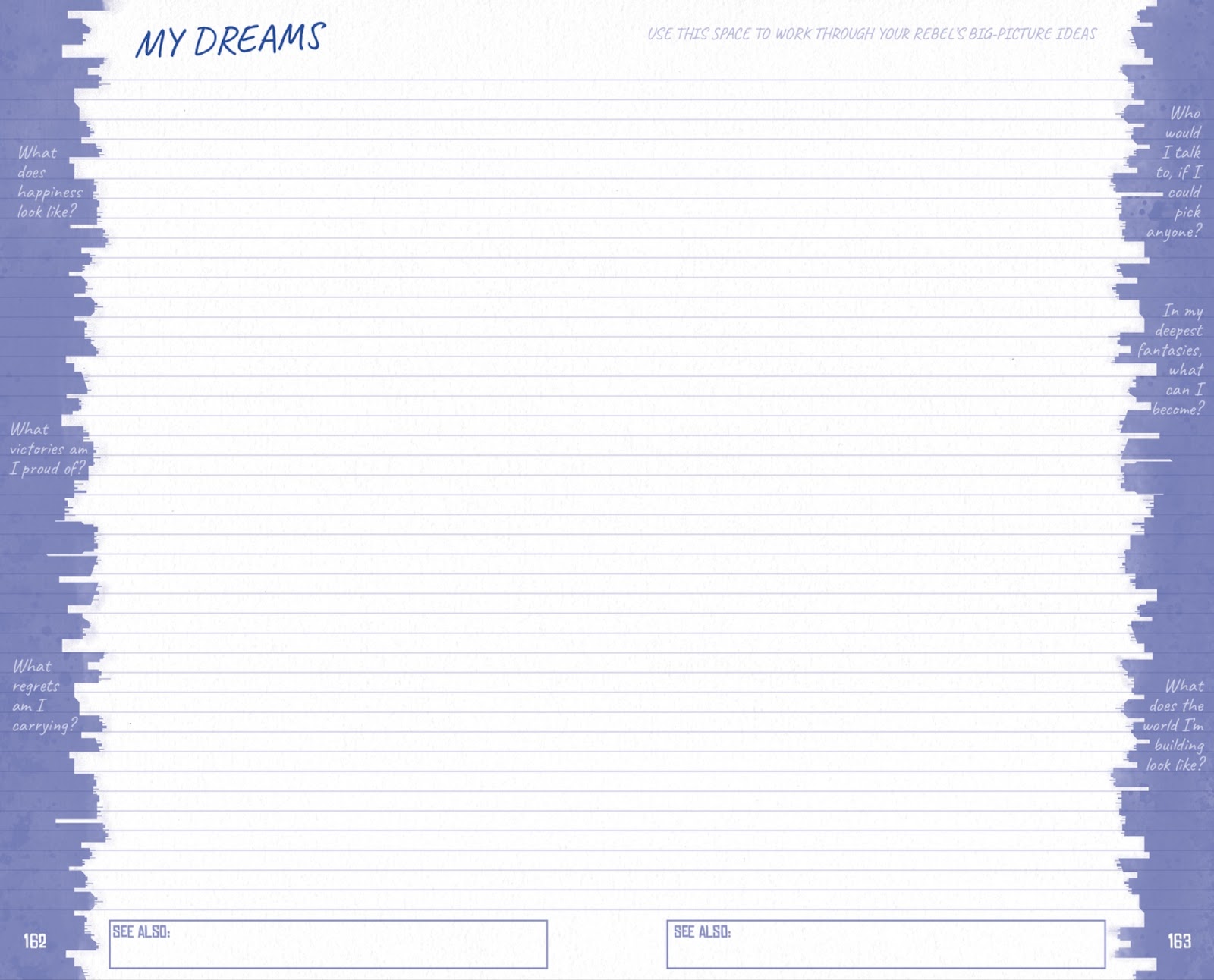
We’ve got space for your rebel to write a diary of their work so far, maybe passed around the group so that each rebel takes a turn to write session summaries:


And many more spread types!

Freeform Note-Taking

Finally, the central third of the book is devoted to space for open-ended doodling. These sections have some ideas in the margins, but they’re mainly here for you to write down whatever comes to mind.


So, that’s the core pitch for the notebook – a space for players and GMs to write down any thoughts or actions or ideas spurred by the campaign. When you get it you’ll also get a PDF of the notebook, and also separate PDFs for each section for you to print out or duplicate as you wish. We have other plans for the notebook on top of everything else I’ve described here, but we’ll have to hit some more stretch goals before I tell you about those.

Thanks for reading!
Mina

TELL US ABOUT YOUR REBELS!
12 months ago – Wed, Mar 12, 2025 at 10:43:21 AM

Hey folks!

Mina here interceding at the start of Chant's update to say that we've hit £50,000! This means two major things: first, we've unlocked The Union! This playbook is pretty dear to my heart as someone with an extremely normal brain, and I'm very happy that I get to move from the cheap stage of design where you put words in a document and onto the expensive stage of commissioning art and playtesting. If you're a backer, look at the bottom of this update for the current draft of the playbook!


Second, it's time to talk about the next few stretch goals. At £55,000 we're using Spot UV to make the book's shiny and textured, but that's only the start of our plans for the cover – more on that later. At £60,000 we unlock the next major rules addition for the book – expanded Hideout mechanics! Your Hideout isn't just an extra-dimensional bolthole for your rebels; it's also a proof-of-concept of the new world your revolution is creating. If we hit this goal, the book will come with full rules support for growing your Hideout as your campaign progresses, unlocking upgrades all the way from handy utilities to occult power to cosmic bids for power.

AND NOW IT'S YOUR TURN

A TTRPG in a book is only half a game - less, maybe. The rest of it only comes into existence when a group of players get around a table (or into a Discord server, or any of the many other ways to play). Your games bring Voidheart to life.

If you've played or run Voidheart before, tell us your best stories. Tell us about your rebels, their triumphs and failures (and how they picked themselves up and got back to the fight), and what they were fighting for.

Tell us your best moments playing Voidheart, and the reasons you play it.

Now... we're partly doing this because the second week of a crowdfunder's quiet, and Chant and Mina want something positive to focus on. We're also planning to take some of what you tell us and turn it into a little video reel (we'll make someone else at RRD read them out) we can share with you. Time dependent, of course. If you'd rather we didn't share what you tell us, please say so in your post! 

Playbook Deep Dive: The Fringe Radicals
12 months ago – Tue, Mar 11, 2025 at 02:14:45 PM

Playbooks in Voidheart Symphony are many things: a philosophy of revolution, a parcel of powerful abilities, a set of building blocks for the community you’ll make together. At their core, though, they serve the same function as classes in Heart and clans in Vampire – they’re the first and biggest choice you make to define your character, and help inform all your subsequent choices.


There are nine playbooks in the game; today I’m going to talk about the three closest to the idea of a ‘rebel’. They don’t blend in, they’re not polite, they don’t agree with the standard worldview. Sure, they suffer for that, but there’s power too.

First up, we’ve got the Heretic. Of all the rebels, they’re the one most committed to burning the castle’s systems down – though sometimes they have trouble distinguishing systems that hurt from systems that protect. They’re the rebel most likely to spot the dark powers strengthening vassals, the dangers lurking in an enemy’s shard, and the victims desperately yearning to be free. As their revolution grows, their flaunting of rules gains mystic force – letting them erase criminal records, find perfect disguises, and speak with the city’s vermin.

As a member of the crew, they might channel their improvisational flair into The Magician – tutoring the crew in an endless variety of niche skills and inventing new rituals on the fly. Maybe they’ve survived terrible traumas, and can channel that into The Tower to find power in pain. Or maybe their rulebreaking is indiscriminate, with The Devil encouraging them to needle their allies and cut corners on their problems – all in service to the greater good, of course. They also bring allies to the fight – maybe their dropout best friend lends them the power of The Vagabond, a visionary firebrand gives them the light of The Sun, or an inspiring artist gives them the wisdom of The Oracle.  

Finally, there’s their approach within the castle. No matter what, the Heretic benefits from an investment in Wands – they want to break into hidden places, and avoid any attempts to pin them down. Building on this their Shadow Moves let them jump between shadows, play a shell game with illusions, and whisper incendiary secrets to turn the castle’s minions against each other. 

Why rebel? Because the castle’s system is rotten and unjust and deserves to burn.

If the world’s a circus, be a clown. That’s the guiding philosophy of the Harlequin, whether they’re a satirist, shitposter, or stoner. Somehow, the castle pierced that ironic detachment – and won’t realise its error until the whole world is dancing on its grave. 

The Harlequin is an incredible distraction – they can spot who’s dying for a break from their work, and can channel the void to make a performance literally unstoppable. Over time their ability to distract, confuse and annoy gains mystic power: dice, card decks and coin flips all work in their favour; they can heal the other rebel’s pains at the cost of temporary confusion; and they can bless a rival with disorienting good fortune that’ll cause them to reassess their life. In the castle, they can use the void’s power to steal the spotlight, overwhelm their enemies with emotion, distract their enemies with decoys and throw their enemies off their game by predicting their next actions.

What do they bring to the crew? Maybe it’s the spontaneity and ridiculous good luck of The Fool, the endurance and patience of The Vagabond, or the intuitive leaps and dreamy wisdom of The Oracle. Or maybe it’s all about the people they can introduce the crew to: a chill peer who brings the mediation of Temperance, a reclusive Hermit who connected with them over an unusual interest, or a fellow survivor who reminds them of a time they’d rather forget and grants the nightmarish strength of The Moon.

Why rebel? Because the castle is a pompous asshole that will crush the joy out of the world.

So, we’ve got philosophical differences and ironic distance. The Watcher seeks distance from society too, but it's because of all the things they can see from that vantage point. Maybe they’re a researcher who discovered uncomfortable truths about the world, a PI who’s seen every evil thing lurking in the city’s richest mansions, or a straight-A student no longer willing to pay the costs of good grades. Either way, they have an incredible ability to chart the movements of the castle, find the people most in need of crucial facts, and draw uncanny insights from the void.

There are many kinds of truth to find, and just as many ways to look for it. Maybe they’re seeking objective distance, and use The Hermit to spot hidden details and avoid the spotlight. Maybe they’re trying to expose things their enemies want to hide, and so The Sun makes the truth impossible to deny and scour away the castle’s darkness and illusions. Or maybe they want to seize the gears of reality, and so Judgement lets them step outside reality and tear the castle’s power away from their enemies.

The Watcher prizes distance, but also knows who to stay close to. There’s their allies in the city – maybe a muck-raking journalist grants them the powers of The Devil, a worried parent figure gives them the support of The Gardener, or a whistleblower gives them the strength of Justice. And within the castle, they use their insights to guide their allies in the crew – perceiving the intangible and immaterial, sending their soul out to scout ahead, and turning their gaze into a weapon that can terrify their enemies.

Why rebel? Because the castle is building a kingdom of lies and will do anything to hide the truth.

That’s our first three playbooks – who would you like to hear about next? The rebels who fight back by using the grassroots power of the mundane world, or the ones who have been comprehensively changed by the occult touch of the void?

And if you're a backer, look below to download all three of these playbooks in the updated interactive PDF style!

Two Stretch Goals and a Question
12 months ago – Mon, Mar 10, 2025 at 11:17:47 AM

Looks like it's Monday, then!

Thank you all for giving us a really great weekend. We hit our first two stretch goals, interactive character sheets and a bookmark ribbon (or, as one very smart backer suggested, three bookmark ribbons in pink, blue, and white? Maybe? We'll see.). I'm personally really happy to be starting the week looking forward to our new playbook, The Union.

If you saw our last update, you've already heard about The Union and seen a preview of the playbook cover. If you didn't, it's a way to explore themes of plurality and solidarity with your rebel. Experience deeper bonds, work in sync with others, make your own secret, inviolable space, and become a giant gestalt version of yourselves.


After The Union, we add a spot UV treatment to the cover of the core rulebook. If you're not a book nerd, that means we're highlighting certain parts of that gorgeous cover art, making it a bit three-dimensional and also very glossy.

Next, something even more important. We want to keep telling you about Voidheart as the campaign rolls on - talking about money and stretch goals is great, but you're here for the game and frankly so are we. So...